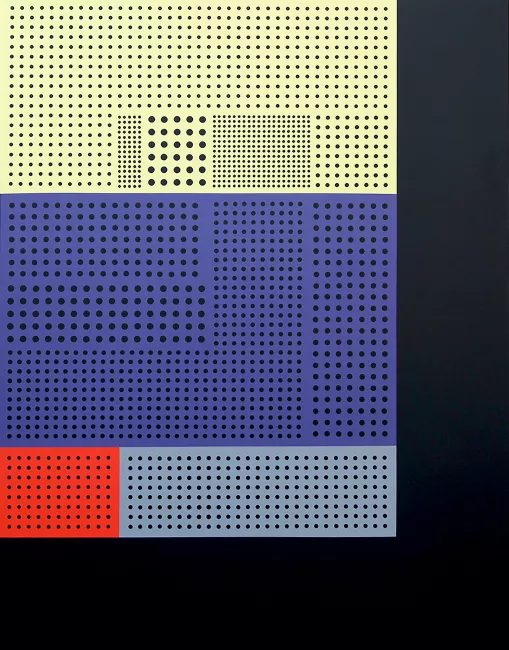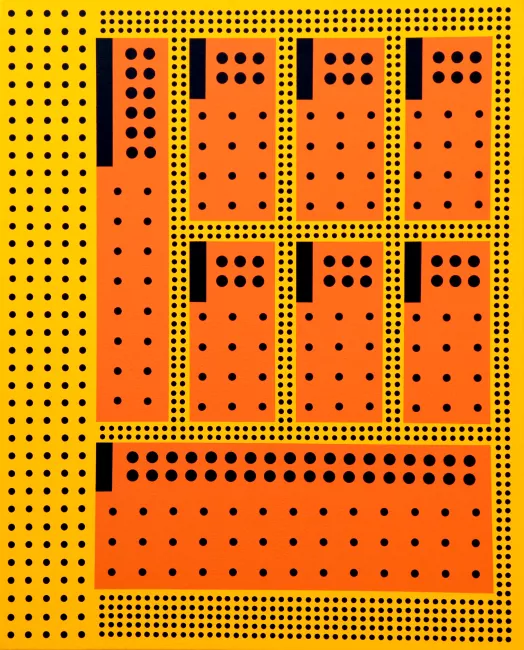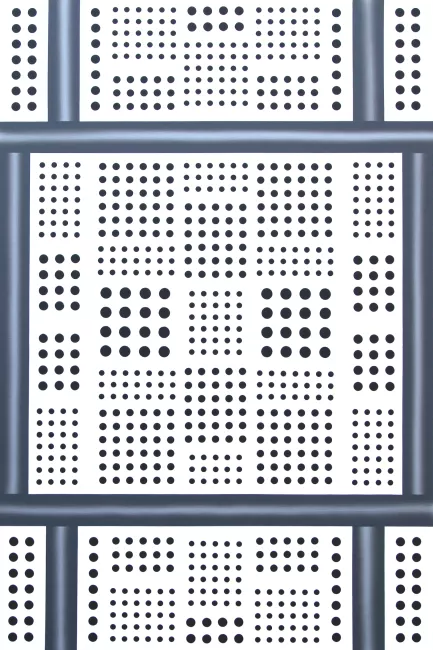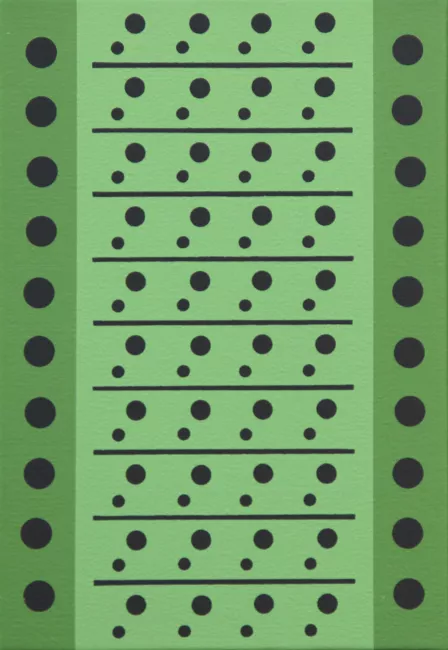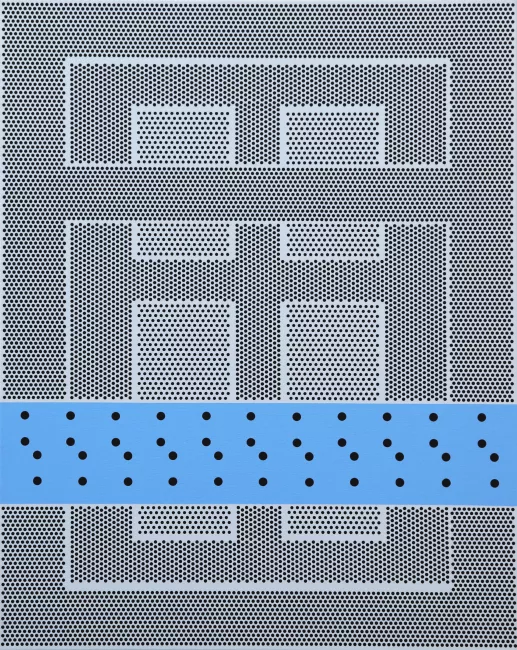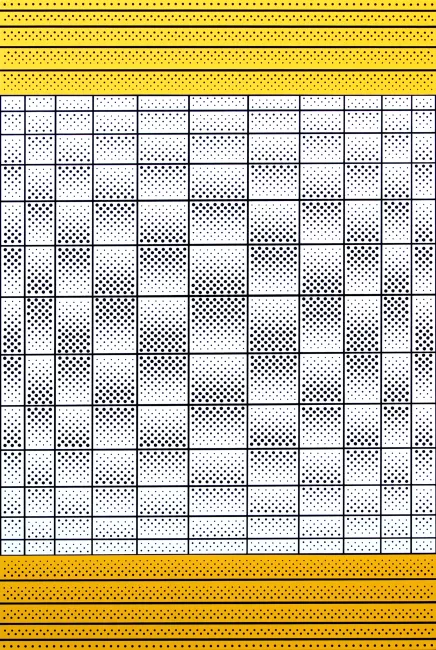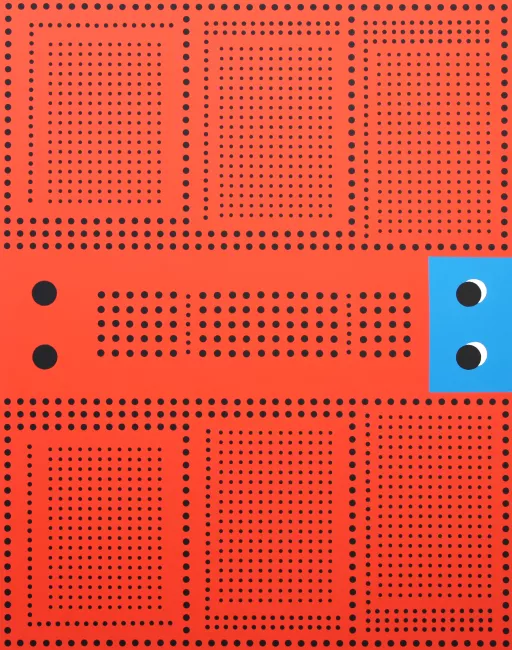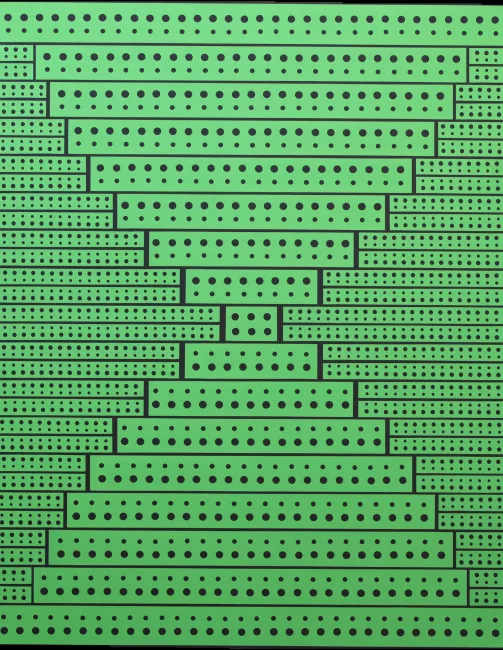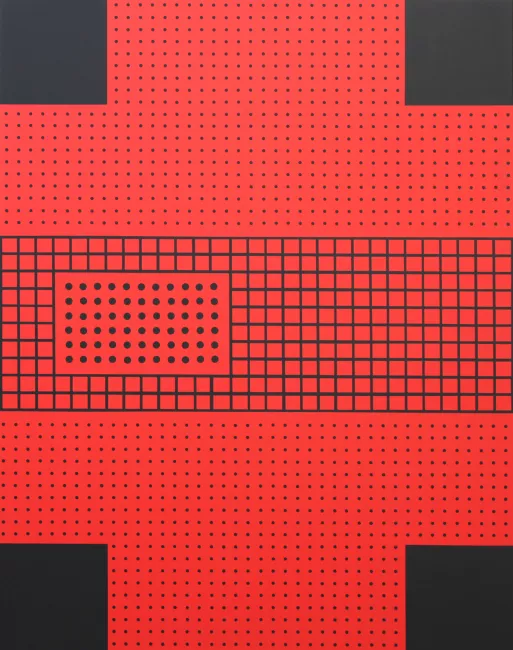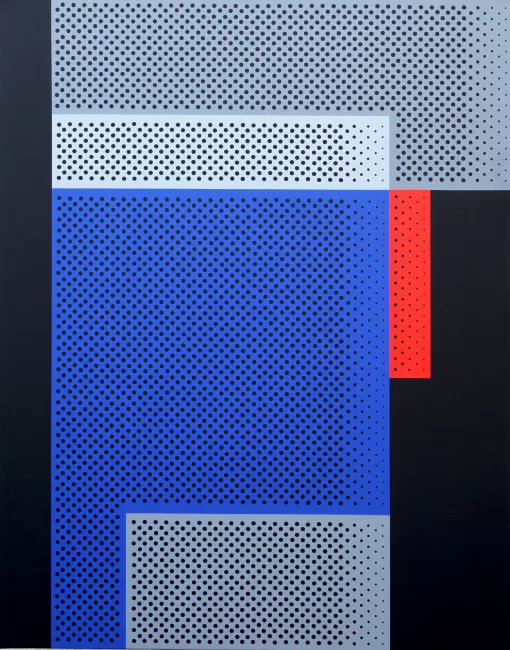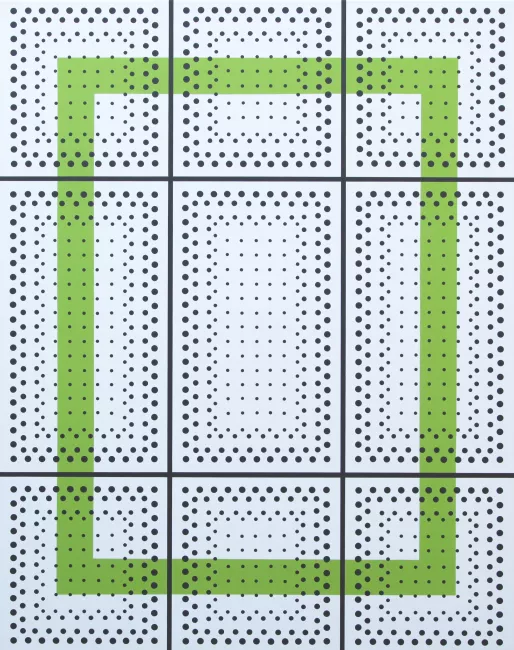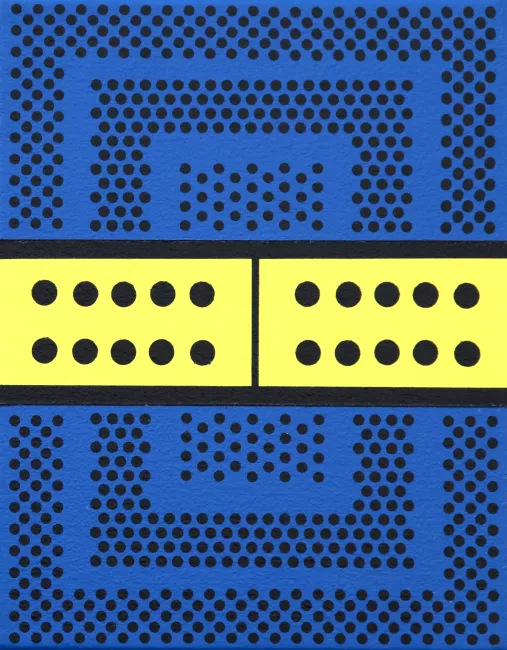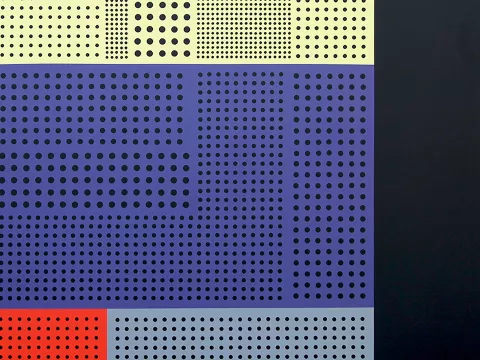
Philippe Compagnon's work is built like a system in which every element seems to obey an internal, almost algorithmic logic. It imitates nothing and symbolizes nothing: it unfolds as an autonomous field in which forms and, to a certain extent, colors serve as fundamental particles. In this visual universe, the governing principle, far from figuration, is interaction, as if the artist were seeking to make a true physics of painting visible.
Philippe Compagnon's work is built like a system in which every element seems to obey an internal, almost algorithmic logic. It imitates nothing and symbolizes nothing: it unfolds as an autonomous field in which forms and, to a certain extent, colors serve as fundamental particles. In this visual universe, the governing principle, far from figuration, is interaction, as if the artist were seeking to make a true physics of painting visible.
Verticals and horizontals are organized into a grid that evokes both the regularity of a weave and the rigor of an equation. Yet, far from being a pure mechanism, each intersection generates an unexpected vibration, like a quantum superposition: the same spot becomes "simultaneously" red and green, blue and orange, a space of coexistence rather than fusion.
Thus this combinatorial system opens onto the infinite through repetition. The line, by virtue of its virtual extension, always exceeds the edge of the canvas. The point, whether visible or implicit, remains an unstable coordinate: a particle in space, but also the onset of a movement. Together, they inscribe time into pictorial matter, not narrative time, but the time of propagation, that of a wave unfolding or of an incident ray being diffracted.
Faced with this structure, the viewer no longer reads an image but observes an energy field. The primary colors, by opposing and allying with one another, create interferences that transform the surface into a space of projection. Each glance triggers a variation, as if the work, like an observed particle, changed its configuration according to the observer's position
There is a perceptible tension here between rigor and the unforeseen: the method is strict, but the effect escapes it, and in that gap an aesthetic dimension emerges, a beauty born of the encounter between protocol and surprise. Painting thus becomes a kind of organism, a self-referential system that feeds on its own laws while remaining ever capable of branching off in a new direction.
What endures, beyond repetition and combinatorics, is the self-evidence of a language reduced to the essential: lines, colors, and rhythms. It is a language that exposes without narrating, seeking not to represent the world but to manifest a hypothesis about it.
Paintings
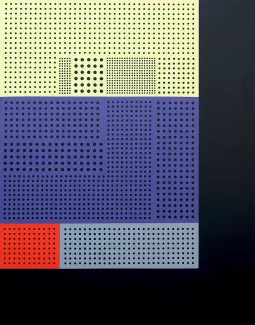 Sans titre, 2026Acrylique sur toile114 x 146 cm
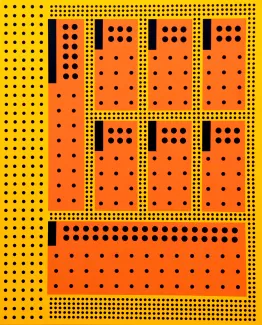 Sans titre, 2026Acrylique sur toile65 x 81 cm
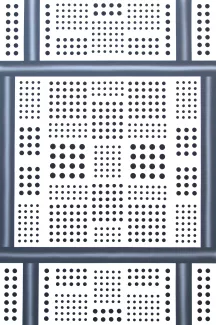 Sans titre, 2026Acrylique sur toile97 x 146 cm
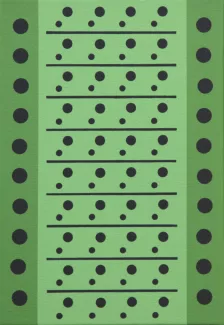 Sans titre, 2026Acrylique sur toile24 x 35 cm
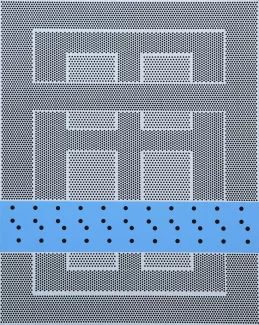 Sans titre, 2026Acrylique sur toile65 x 81 cm
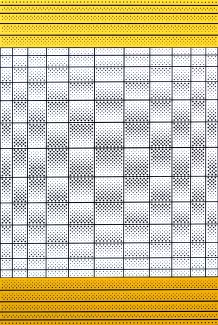 Sans titre, 2026Acrylique sur toile97 x 146 cm
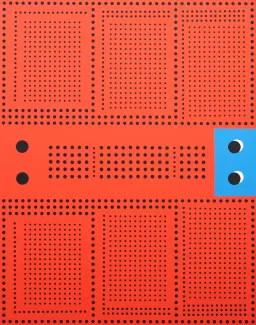 Sans titre, 2026Acrylique sur toile114 x 146 cm
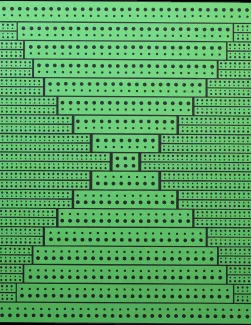 Sans titre, 2026Acrylique sur toile114 x 146 cm
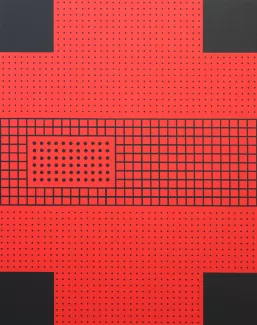 Sans titre, 2026Acrylique sur toile114 x 146 cm
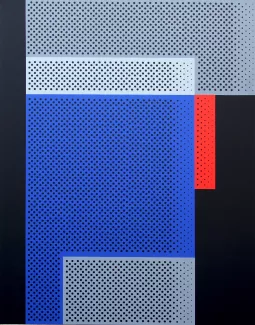 Sans titre, 2026Acrylique sur toile114 x 146 cm
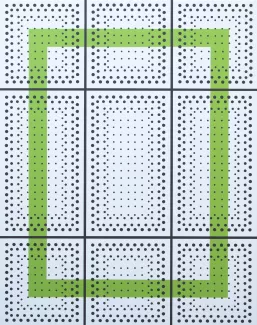 Sans titre, 2026Acrylique sur toile114 x 146 cm
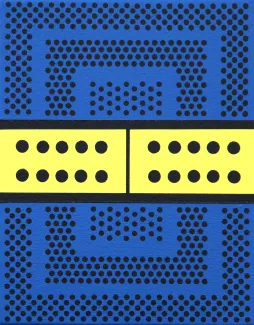 Sans titre, 2026Acrylique sur toile19 x 24 cm